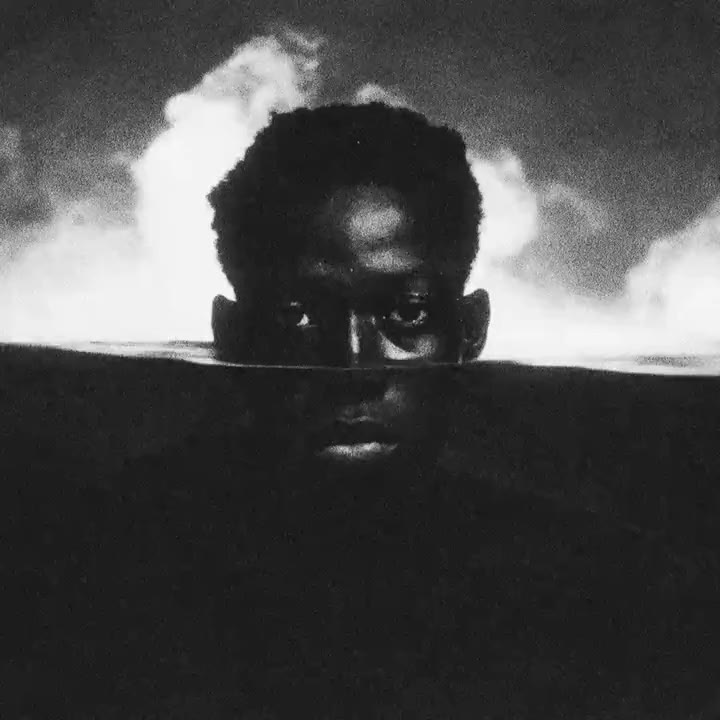
Lighting.
The main portrait lighting techniques: where to place the light, the shadow it draws, and what it conveys. Each technique with its top-view set diagram.
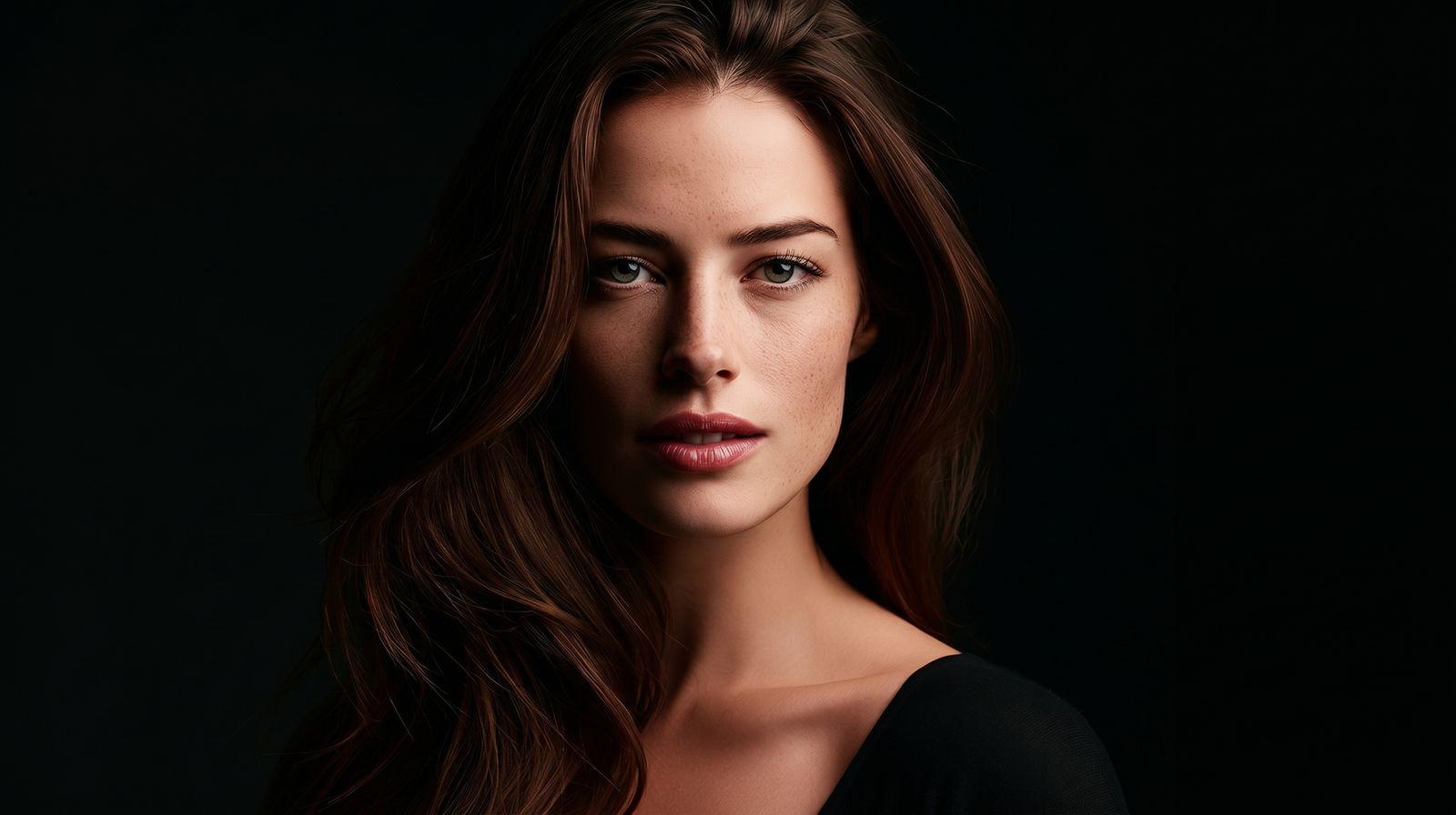
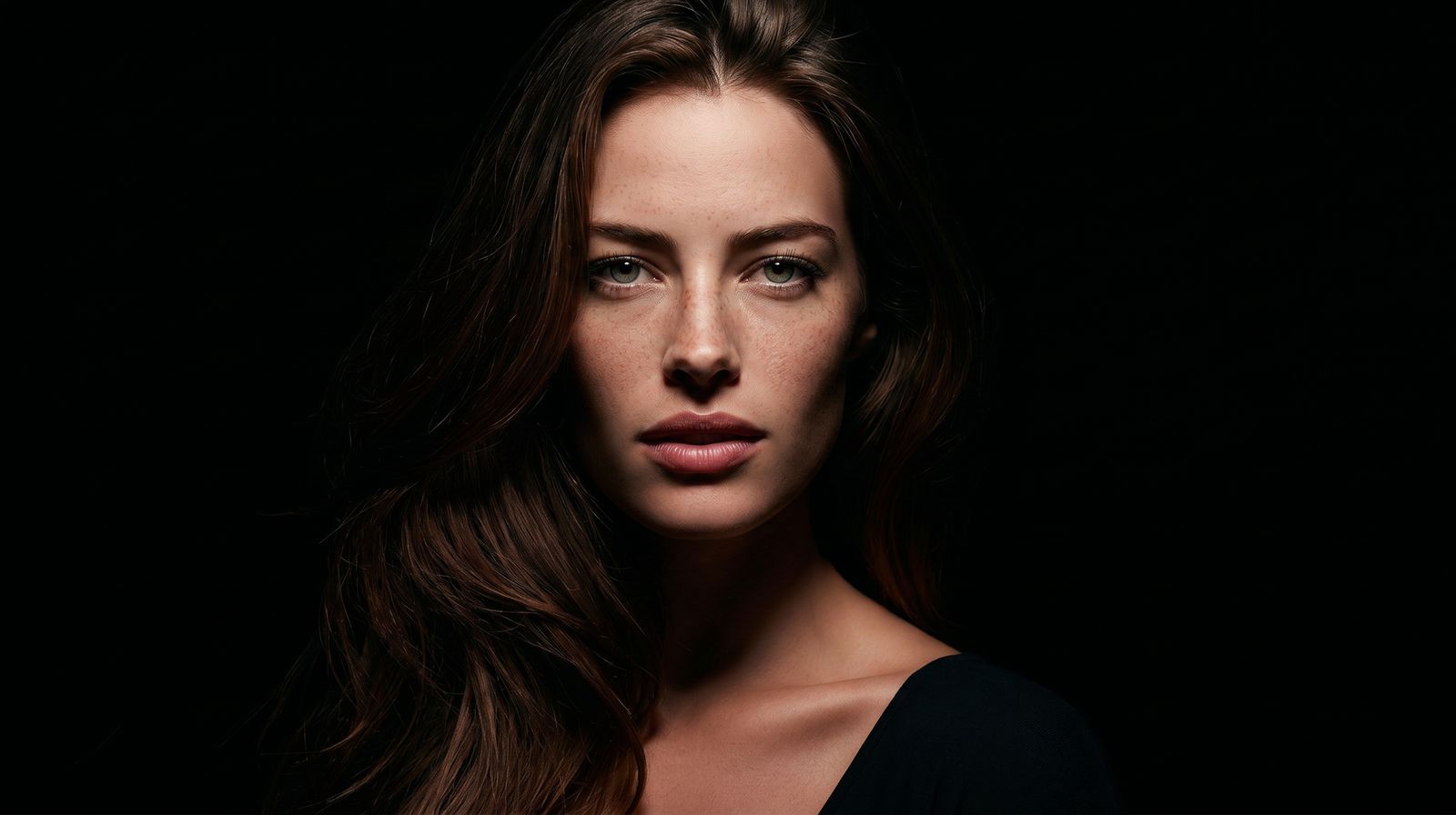
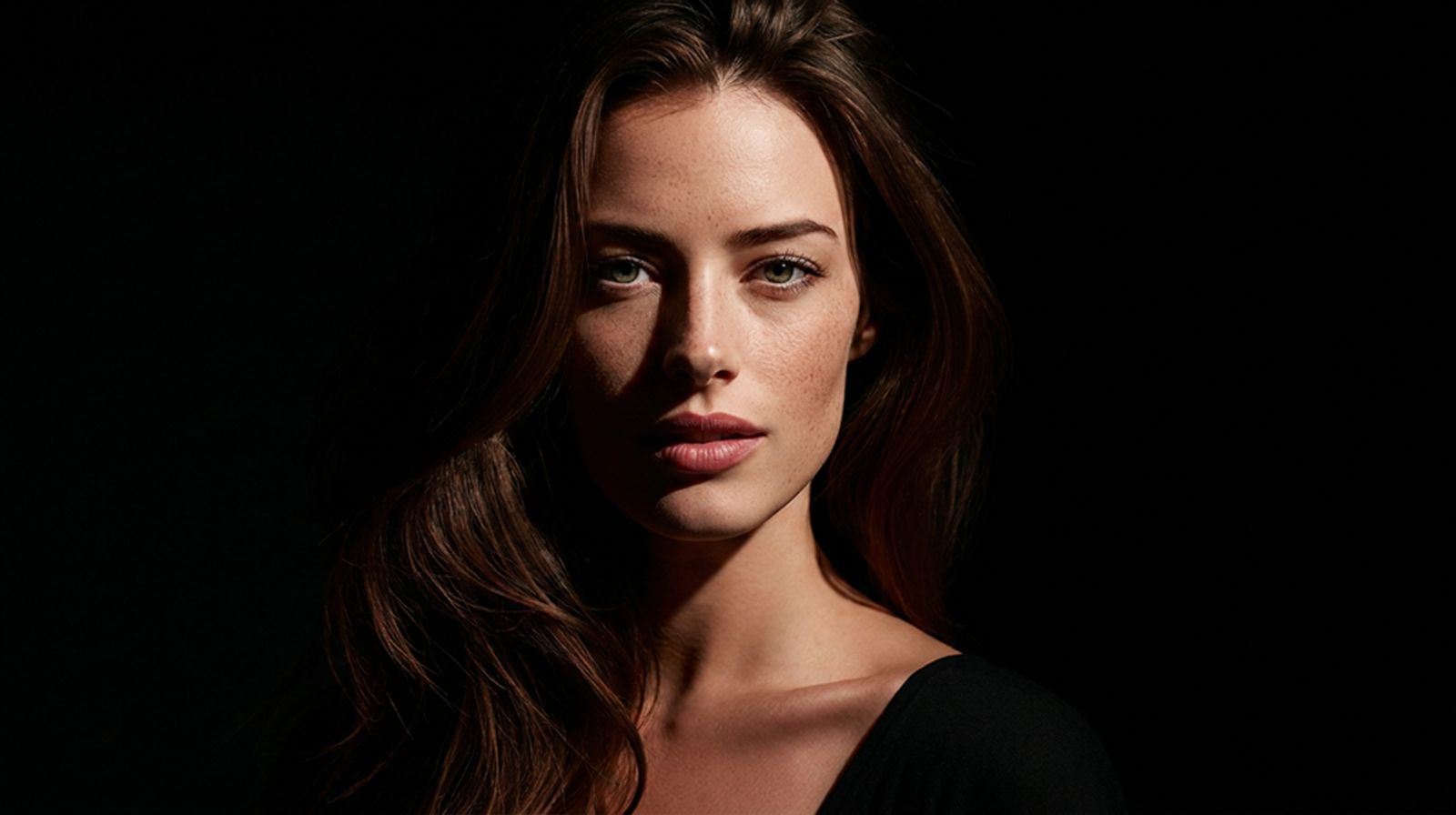
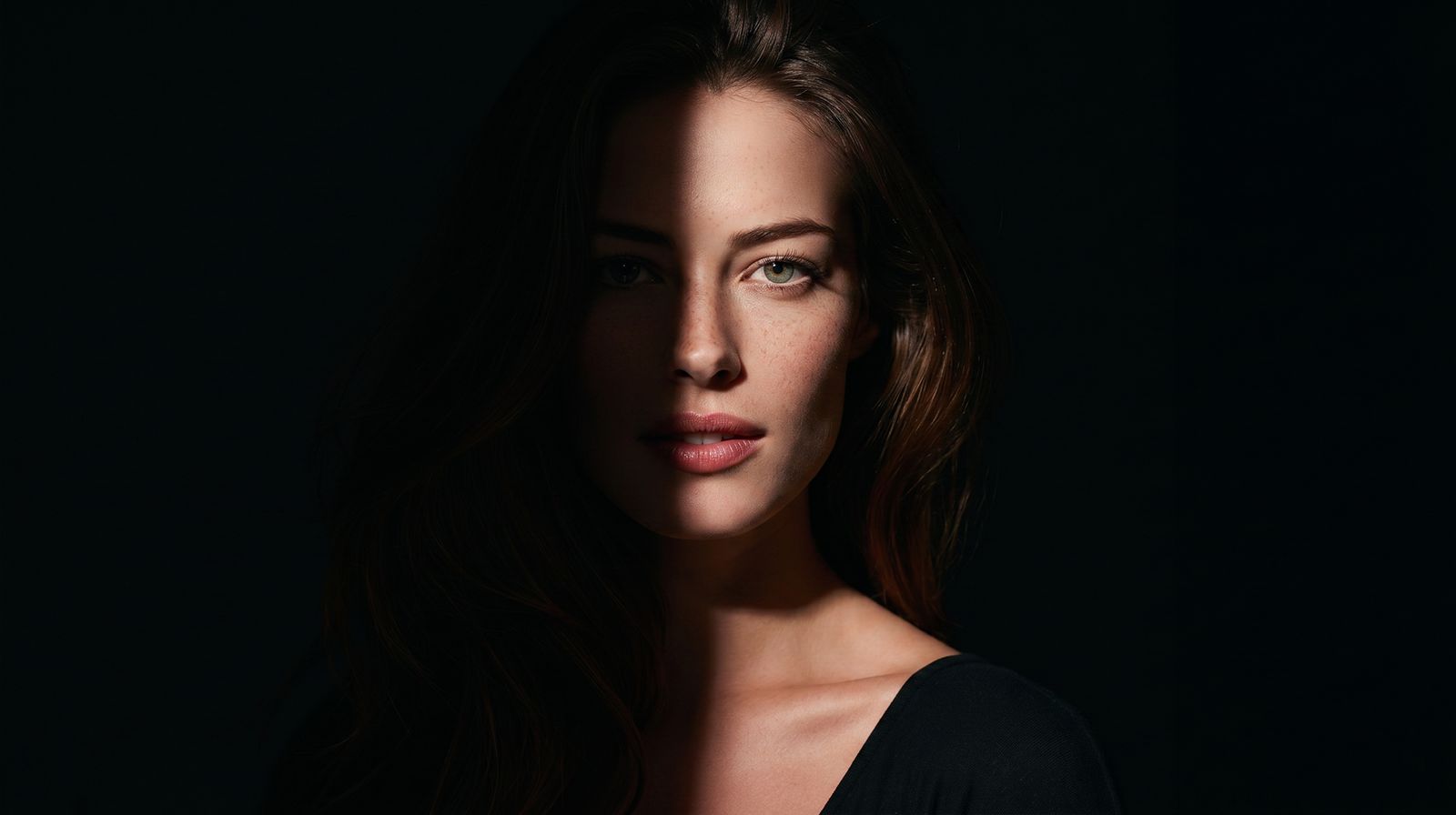
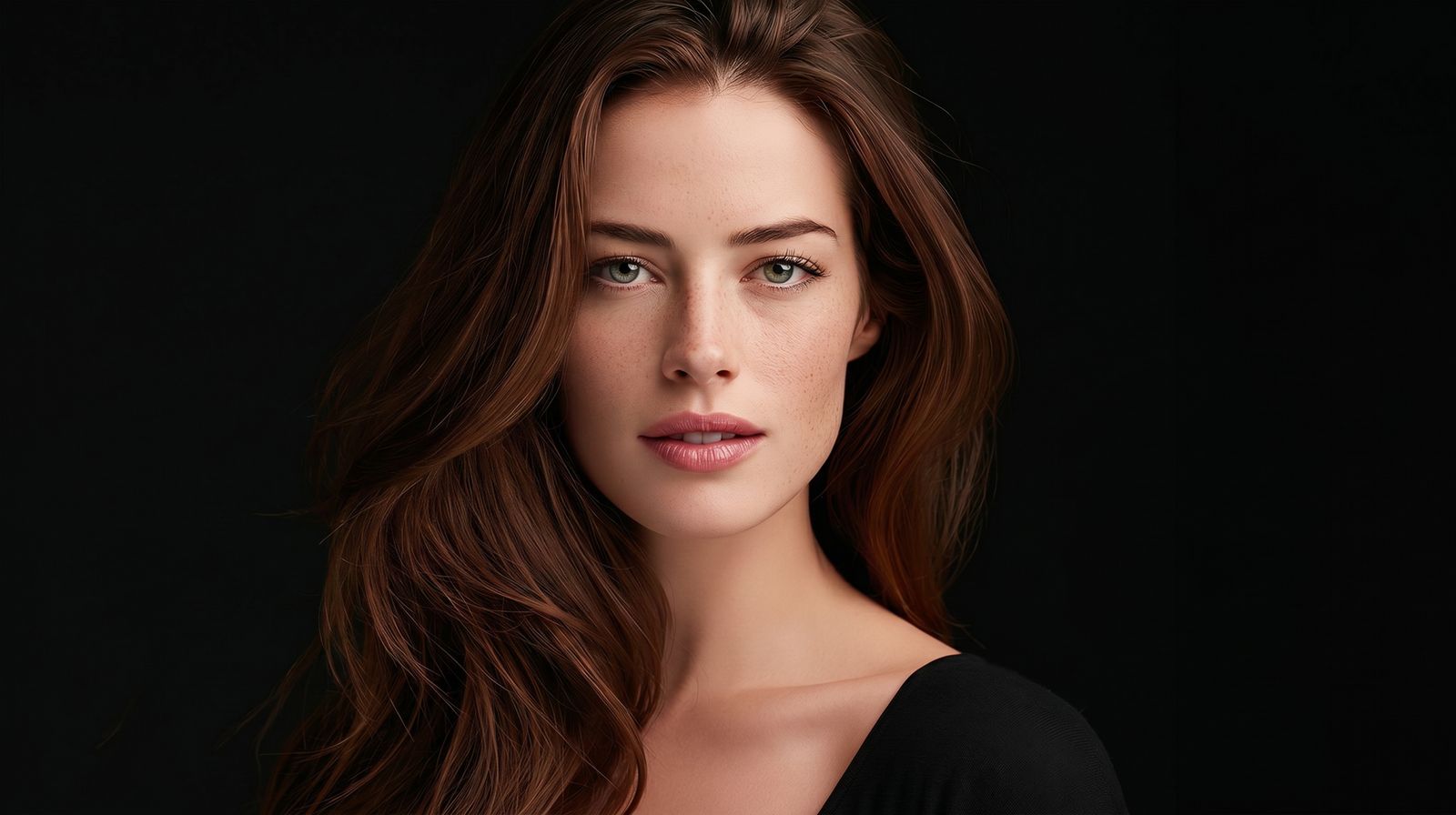
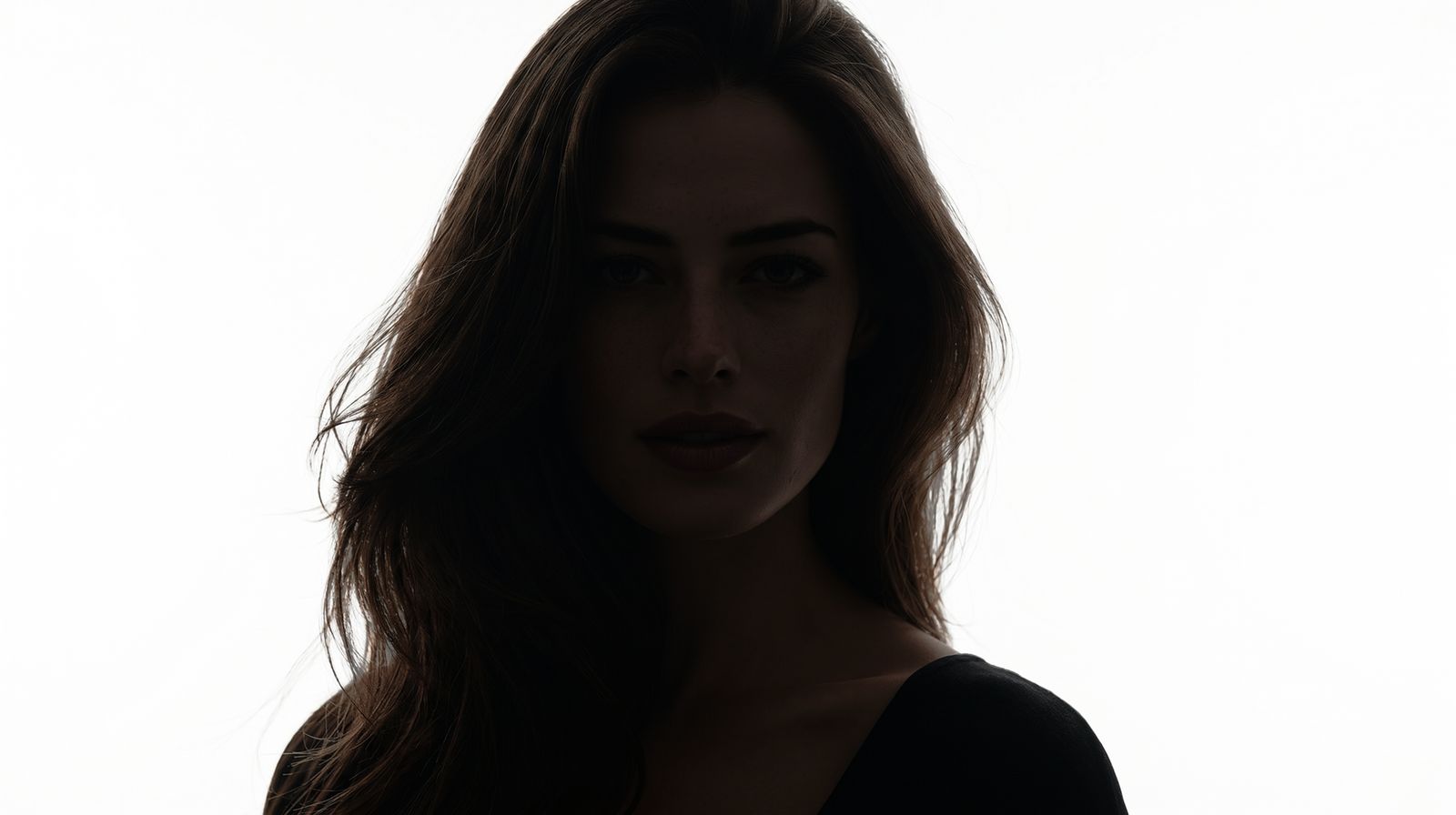
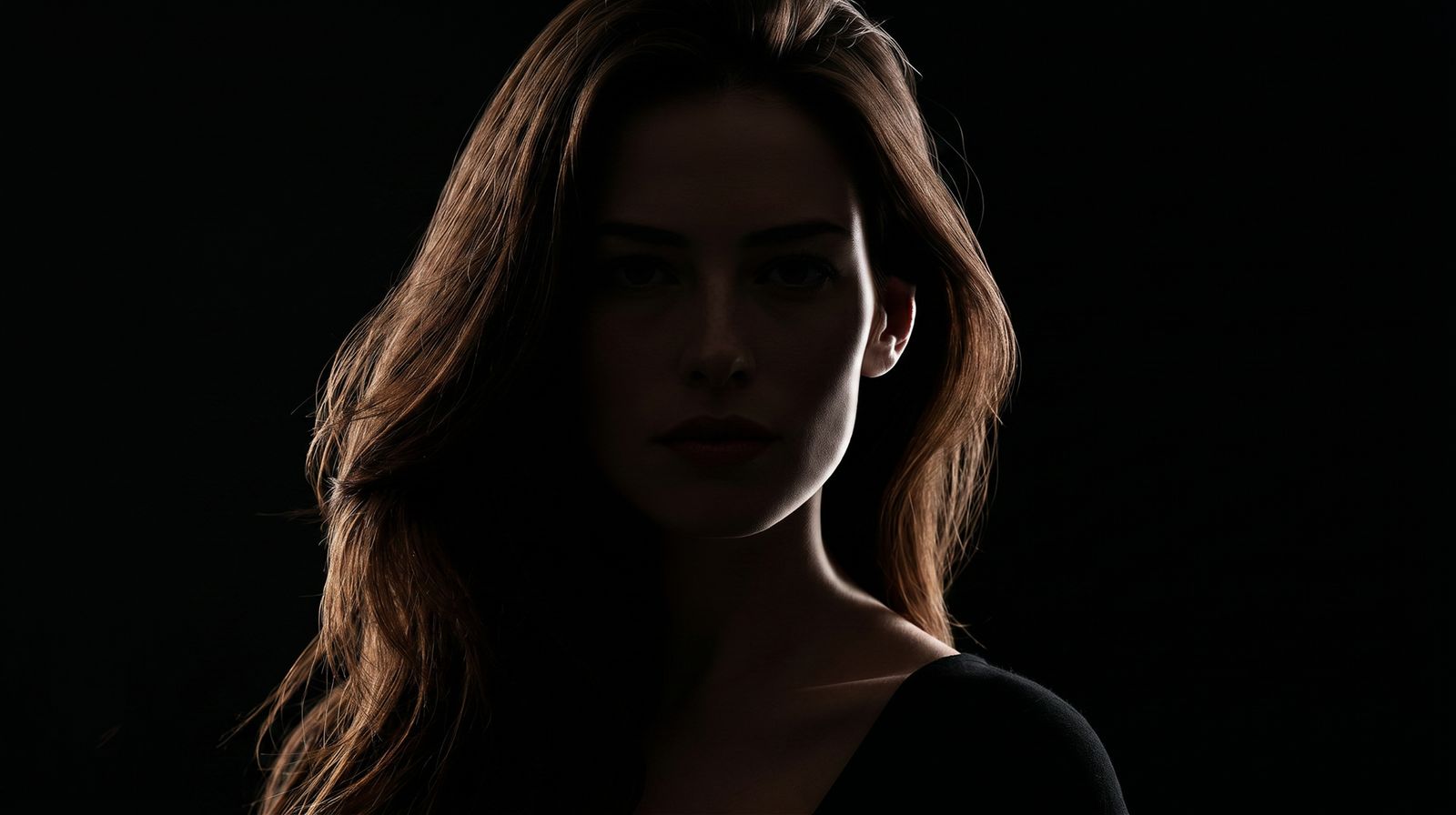
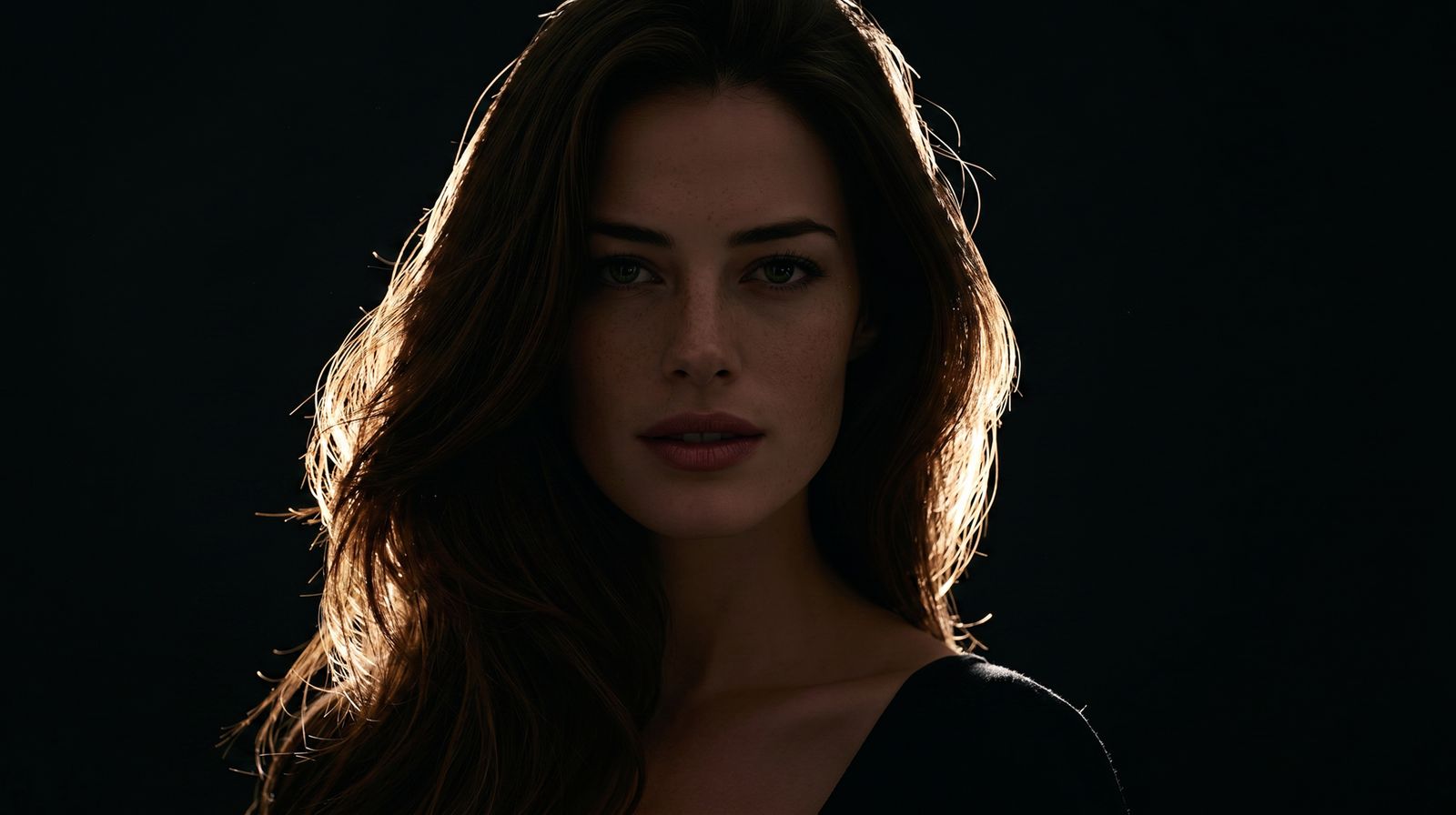
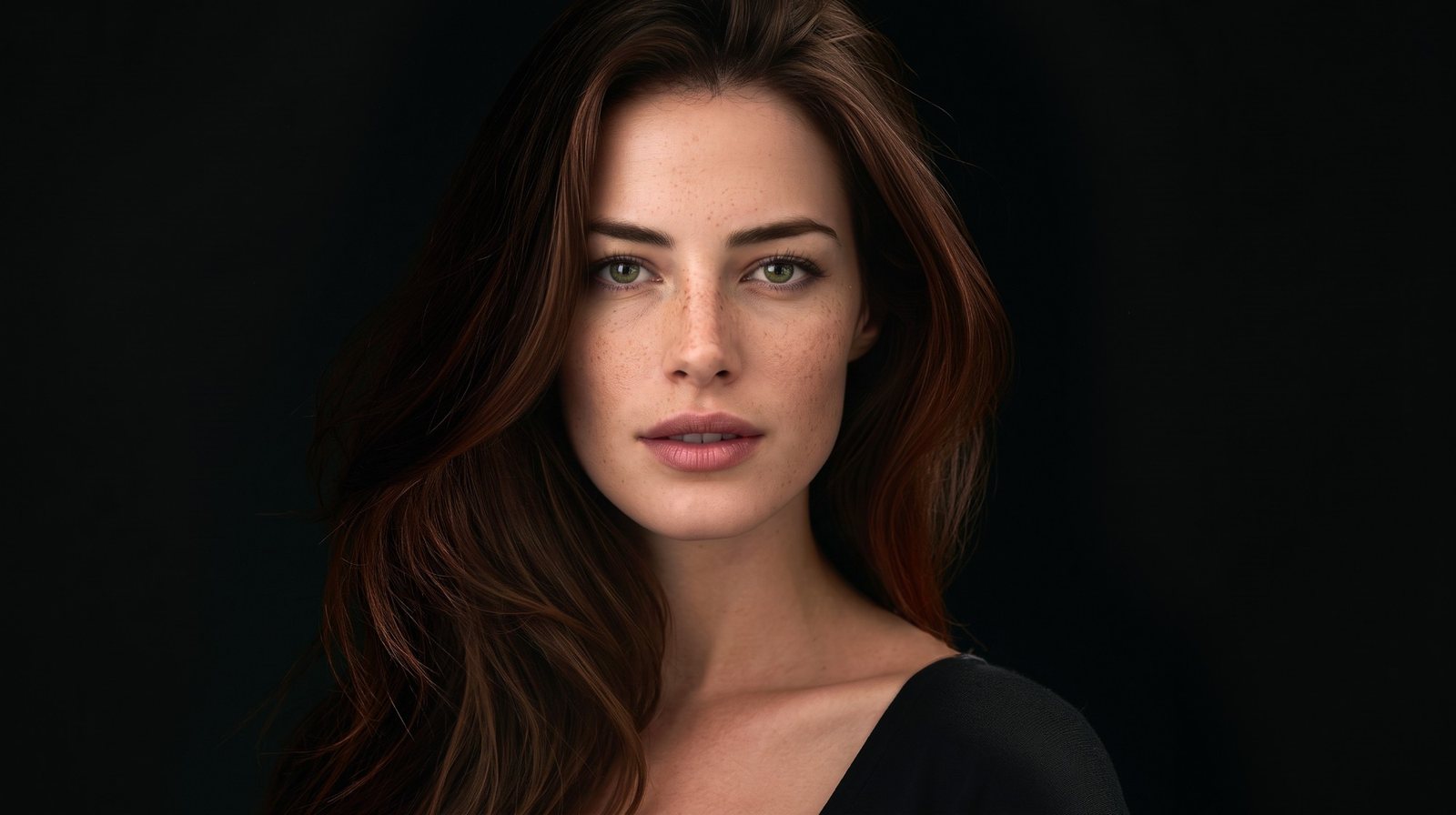
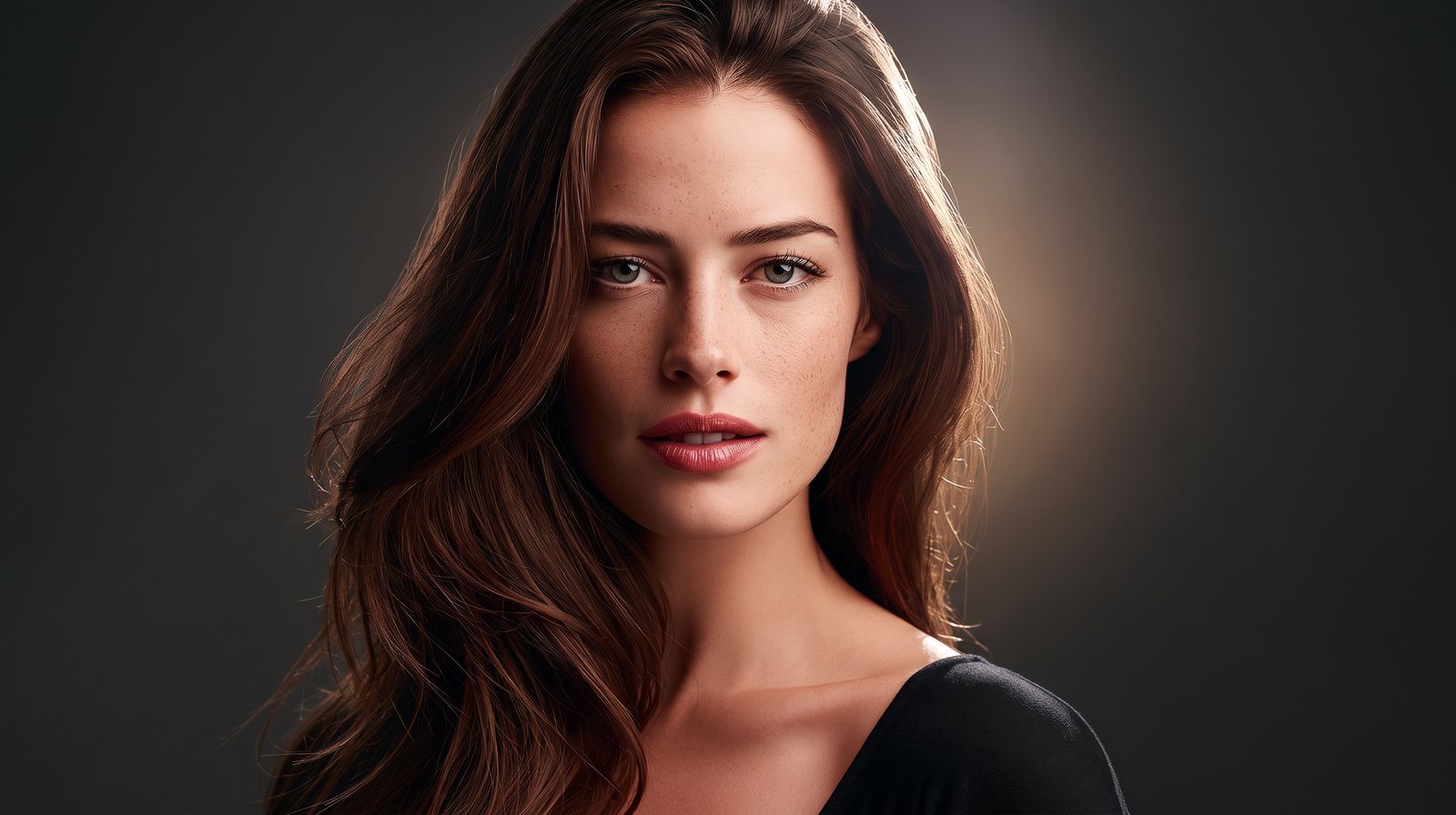
Azimuth 30-45° · Height ≈ 15-30°, slightly above eye level
Key at 30-45° to the side of the camera, slightly above eye level. The nose casts a small 'loop' shadow on the cheek without meeting the shadow on the far side. The most common and flattering setup: natural, dimensional, easy to nail.
OriginThe foundational portrait light, the most taught and most used - the base the others derive from.
Key light placed high and straight in front of the subject, on the camera axis, angled down. It casts a small symmetrical butterfly-shaped shadow under the nose. Glamorous, lit cheekbones, smoothed skin - the classic Hollywood portrait. A reflector under the chin is often added to lift the neck shadow.
OriginPopularised by Paramount studios in 1930s Hollywood to glamorise their stars (Dietrich, Lombard…) - hence its other names, 'glamour' or 'Hollywood' lighting.
Key at 45-60° and higher than for Loop. The nose shadow joins the cheek shadow, leaving a small triangle of light on the shadow-side cheek - Rembrandt's signature. Dramatic, sculptural, intimate. A reflector on the opposite side can soften the contrast.
OriginFrom the painter Rembrandt van Rijn (17th c.), a master of chiaroscuro whose portraits show this cheek triangle. Adopted by Hollywood: legend credits the name to Cecil B. DeMille, who reportedly used it to justify more dramatic lighting.
Key at 90°, at eye level: one half of the face lit, the other in shadow, split cleanly down the middle. High-contrast, tense, theatrical - character, conflict, mystery.
OriginRooted in theatrical chiaroscuro and film noir, where the dark half of the face serves the dramatic tension.
Frontal, broad light, completed by reflectors or fill on both sides: almost no shadow, even illumination. Flattering for skin (it erases texture), used in beauty and clean advertising. Little depth, lots of softness.
OriginA beauty and advertising light, popularised by fashion and television; its modern on-axis version is the ring light (which also leaves a circular catchlight).
Source placed behind the subject, aimed at the camera. It separates the subject from the background and, depending on exposure, yields a clean silhouette or a glowing halo along the edges. Atmosphere, depth, backlighting.
OriginPart of the classic three-point system (key / fill / back) codified by Hollywood studios to lift the subject off the set.
A back-side, grazing source that draws only a thin rim of light along the subject's edge, separating it from a dark background. Often paired with a key. Sculptural, cinematic. Two rims (left + right) fully outline the silhouette.
OriginA variant of the back light (also called a kicker), widely used in film to carve the subject out against a dark background.
Source placed high and behind, aimed at the hair and upper shoulders. It adds a highlight that separates the subject from the background and adds depth. Subtle and controlled - it is flagged to keep it from spilling onto the face.
OriginA staple of golden-age Hollywood studio lighting - the sheen on the hair, especially in women's portraits.
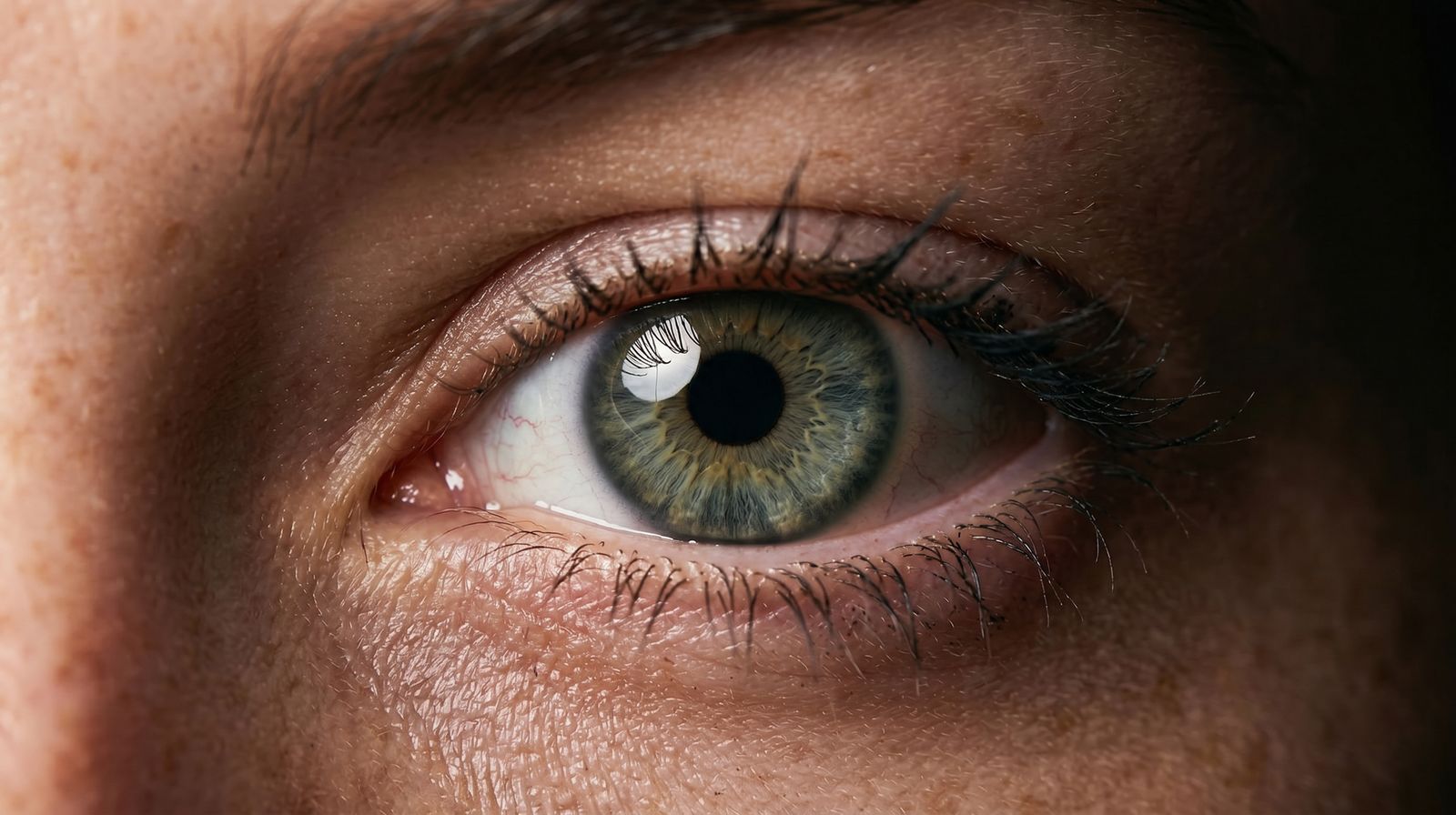
The catchlight is the reflection of the source in the eye - a small bright point that makes the gaze come alive. Place the key around 10-11 or 1-2 o'clock above the eye for a natural reflection. A centred or missing catchlight leaves the gaze flat and lifeless.
OriginMore a principle than a setup: the 10-2 o'clock position mimics natural light from above (sun, sky). The ring light gives a circular version.
The fill light complements the key to soften the shadows. Placed on the opposite side and weaker, it never dominates the scene. Lots of fill: high key lighting, light and low-contrast (comedies, sitcoms, advertising, beauty). Little fill: low key lighting, more contrast and a more 'cinematic' look (dramatic stories). A reflector can act as a fill.
Key light: the main light, which every other light is placed around, usually the brightest. Fill light: fills the shadows cast by the key. Back light: behind the subject, it separates it from the background. Background light: lights the backdrop, otherwise the subject is well lit against a dark set.
Glossary
The most common lighting gear - sources, modifiers, cutting and metering.
Mandarine
An open-face fixture (no lens) ≈ 800 W, 3200 K. Created by Ianiro in the 1960s for lightweight shoots. Hard-to-control beam. Also called a redhead.
3D head: “Infinite, 3D Head Scan” by Lee Perry-Smith, Creative Commons Attribution 3.0 licence.
Audio narration: Kyutai TTS speech synthesis (Kyutai, CC BY 4.0), voice p225 from the VCTK corpus (University of Edinburgh, CC BY 4.0).
Recognise the techniques on the 3D head in camera view, plus a few vocabulary questions.